Teaching AI Models to Say “I’m Not Sure”
A New Approach to Calibrated AI Confidence
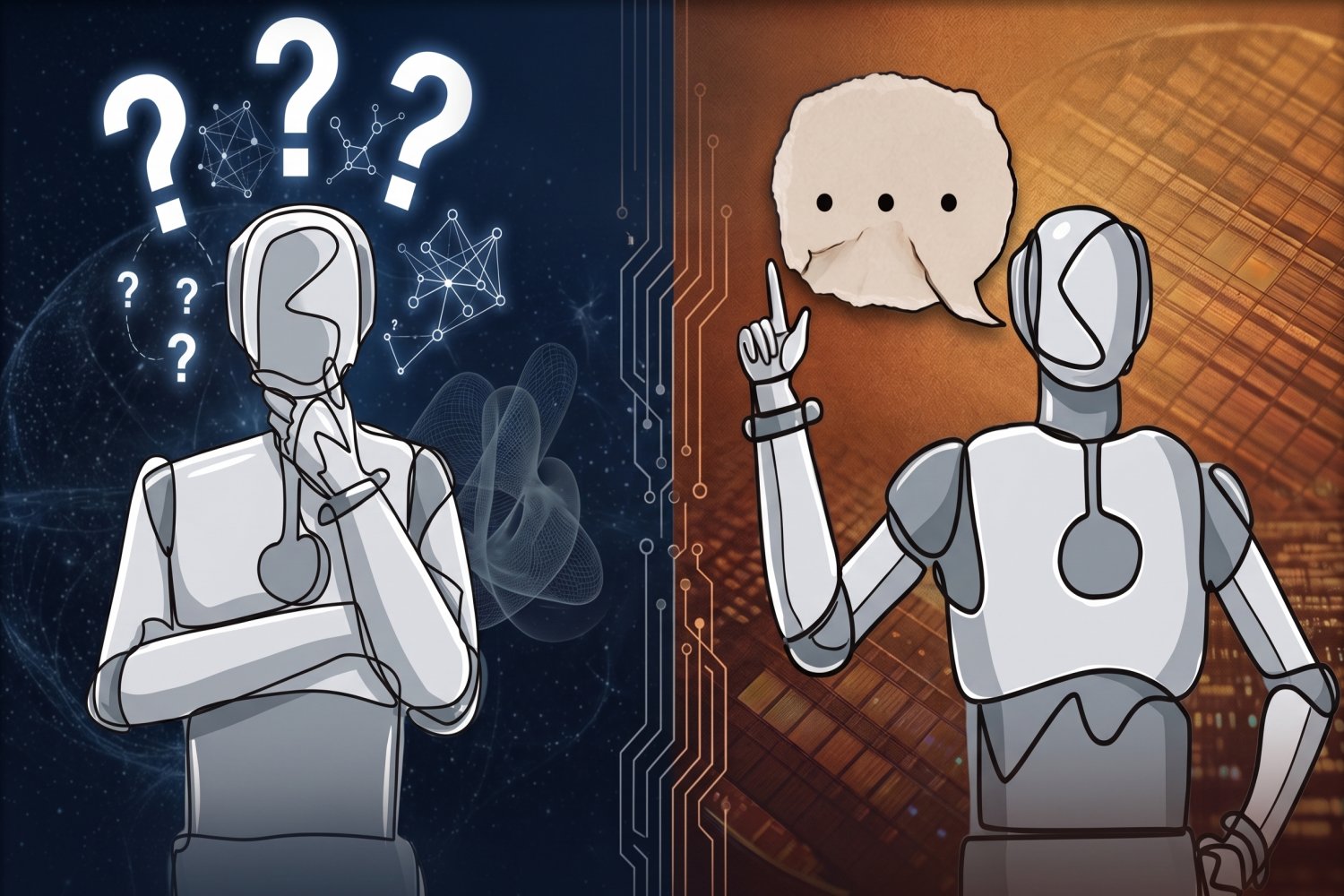
Artificial intelligence systems are known for their assertive answers, but this can be misleading—especially when the AI is simply guessing. Researchers from MIT’s Computer Science and Artificial Intelligence Laboratory (CSAIL) have pinpointed how current training methods foster this overconfidence, and introduced a solution to make AI responses more trustworthy without impacting accuracy.
Introducing RLCR: Calibrated Confidence for AI
The new technique, “Reinforcement Learning with Calibration Rewards” (RLCR), trains models not only to generate answers but also to reflect on and score their own uncertainty. This enables AIs to produce a confidence estimate with every answer, significantly improving their reliability on a variety of benchmark tasks, including those the models have never seen before. In testing, RLCR reduced calibration errors by up to 90% without sacrificing performance.
Why Overconfidence Matters
Traditional reinforcement learning trains AI to prioritize correct answers, rewarding accuracy and penalizing mistakes. However, it ignores how certain the AI actually is, leading to systems that appear overly confident regardless of real certainty. In high-stakes environments like finance and medicine, this presents a grave risk since users may trust AI outputs more than warranted, making it challenging to identify when a second opinion is needed.
How RLCR Improves Model Behavior
RLCR’s innovation comes from adding a calibration term—specifically, a Brier score—to the training rewards. This penalizes large gaps between the AI’s stated confidence and its actual accuracy, incentivizing models to give more honest estimates of what they know and don’t know. The approach consistently performed better than traditional training and post-hoc calibration methods, showing practical value by enabling more intelligent selection and weighting of model answers.
Practical Impact and Future Applications
Besides improving answer reliability, the researchers discovered that AI models become better at tasks when they reason about their own uncertainty. This self-reflection enhances performance, especially for smaller models. The advancements have significant implications for deploying AI in fields where understanding and expressing uncertainty can be as crucial as delivering the correct answer.
Read more about this research in the original article by Rachel Gordon at MIT CSAIL: Teaching AI models to say “I’m not sure”.


