Games people — and machines — play: Untangling strategic reasoning to advance AI
Exploring the Foundations of Strategic AI
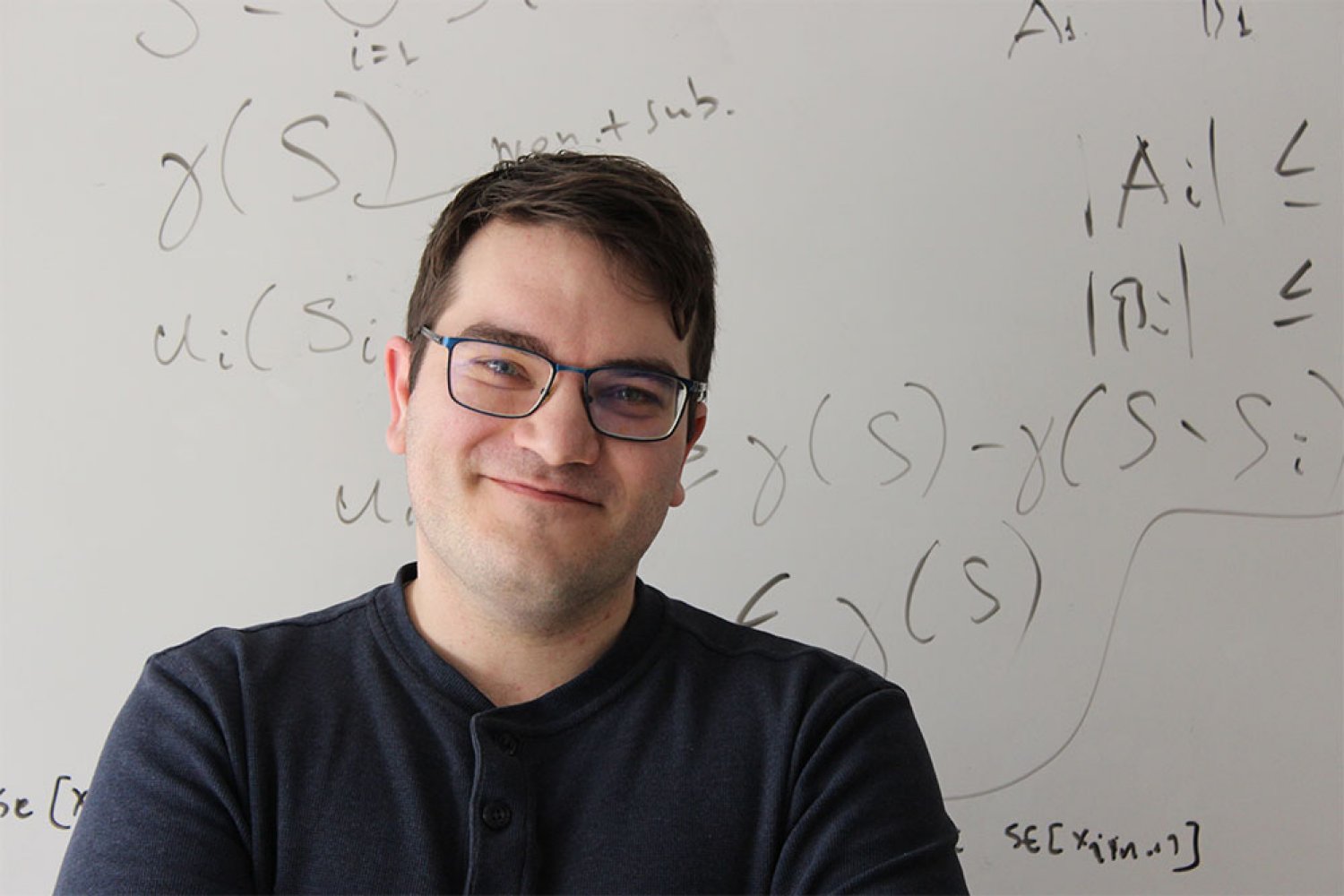
Gabriele Farina, an assistant professor at MIT’s Department of Electrical Engineering and Computer Science and principal investigator at the Laboratory for Information and Decision Systems, is focused on deciphering how machines can make advanced strategic decisions. By combining game theory with machine learning, optimization, and statistics, Farina aims to deepen the theoretical and algorithmic basis for AI-driven reasoning in complex, multi-agent environments.
From Early Curiosity to Academic Excellence
Growing up in northern Italy, Farina was captivated by the idea of machines outsmarting humans through mathematics and clever programming. By his teenage years, he was coding systems capable of calculating optimal moves in board games, already demonstrating an interest in strategy and automation.
Farina’s academic journey led him to Politecnico di Milano, where a growing passion for theory and foundational research paved the way toward a PhD in computer science at Carnegie Mellon University. Along the way, he earned recognition for his research and was awarded a Facebook Fellowship in Economics and Computation.
Innovations in AI, Game Theory, and Strategic Reasoning
Farina contributed to Meta’s Fundamental AI Research Labs, helping develop Cicero, an AI that excels in games hinging on alliance, negotiation, and bluff detection. By training Cicero not to form alliances that went against its interests and enabling it to spot when others were bluffing, Farina helped demonstrate that artificial agents can now often outperform humans in tasks requiring complex social reasoning.
Farina's work seeks to address the immense computational challenges in modeling multi-agent systems—where calculating every equilibrium move could be nearly impossible. He leverages advanced algorithms to efficiently identify stable points and manage dynamic strategies even when agents possess hidden information, such as in poker or the board game Stratego.
Breakthroughs in Imperfect Information Games
Imperfect information scenarios, where not all players know the same facts, make strategic gameplay particularly challenging. Farina and his team created cost-effective training methods that allowed AI to surpass top human players in Stratego, a game long considered a difficult frontier for AI due to its complexity and bluffing requirements. These results show the potential for powerful, efficient AI solutions in both gaming and real-world multi-agent scenarios.
Advancing the Future of Strategic AI
Farina’s ongoing research strives to bring robust strategic reasoning and efficient computation to AI systems, pushing them closer to human or even superhuman decision-making in environments featuring uncertainty and competing interests. He anticipates that these advances will play a pivotal role in the broader evolution of AI technologies.
Read the original article at MIT News.