Introduction
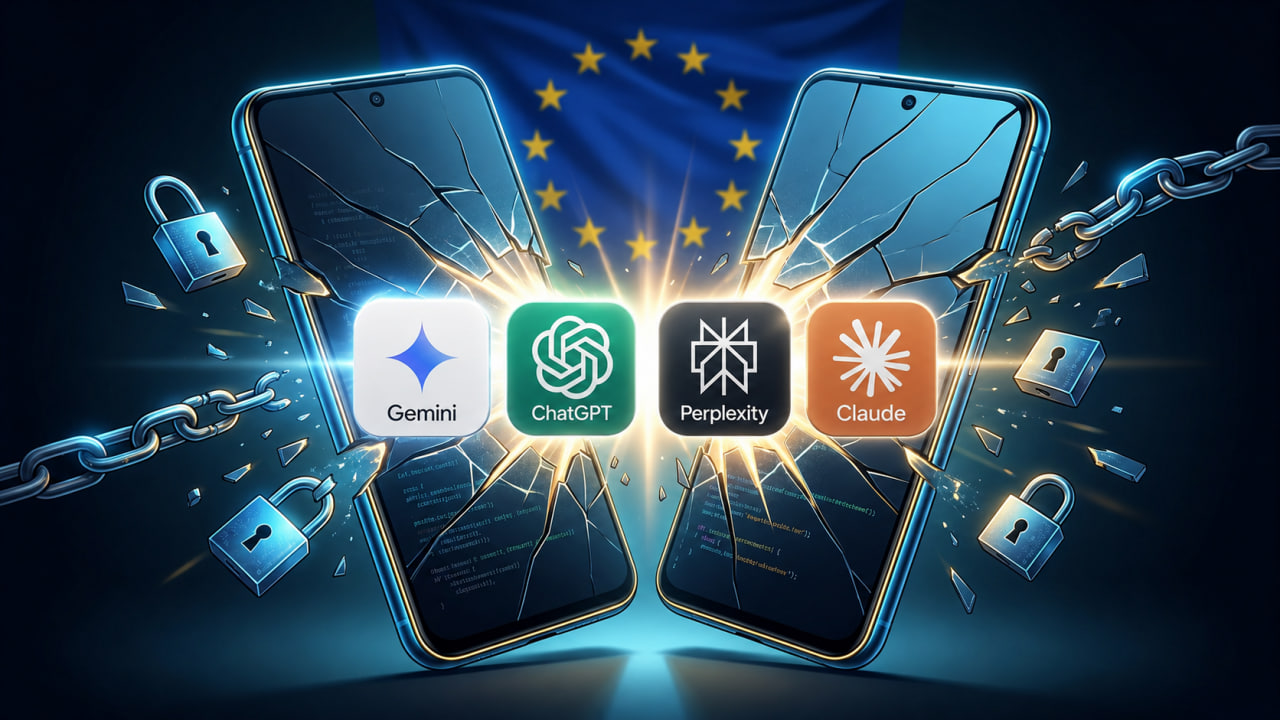
AI assistants may soon compete on much more equal terms across Android devices in Europe. On July 16, 2026, the European Commission adopted two binding decisions under the Digital Markets Act (DMA) requiring Google to open key Android capabilities to qualifying third-party AI assistants and share certain Google Search data.
Why the EU acted
Android powers roughly 60% of smartphones in the EU, making Google the dominant mobile operating system provider in the region. Regulators determined that Gemini’s deep, privileged integration creates an unfair advantage, limiting choice for users and innovation for rivals. The DMA aims to prevent gatekeepers from using platform control to favor their own services as AI assistants become central to mobile experiences.
Why Now?
The decision reflects growing concerns that generative AI assistants are becoming the next major battleground on smartphones. As these tools handle searches, schedules, messages, smart devices, and cross-app tasks, regulators worry that OS owners like Google could entrench dominance by granting their own AI exclusive access to key platform features.
Under the DMA, gatekeepers cannot use platform control to unfairly favor their services. The Commission concluded that opening Android’s AI capabilities will boost competition, spur innovation, and let users choose their preferred assistant without losing functionality.
What Did the EU Decide?
The July 16, 2026 specification measures under Article 6(7) of the DMA address two main areas.
Android AI Interoperability: Google must grant qualifying third-party AI assistants access to 11 defined features. These encompass:
- Voice activation and wake-word support (even with screen off).
- Access to on-screen content for context.
- Ability to perform actions in other apps (e.g., composing emails, booking services).
- On-device data access and proactive suggestions (with consent).
- Integration with system functions and on-device AI models.
Five of these capabilities are designated as restricted, requiring certification under a Google program with objective privacy, security, and integrity criteria. Google must publish draft eligibility terms by February 1, 2027, and begin accepting applications by May 1, 2027.
Timeline: Most changes must be implemented with Android 18 or by August 1, 2027 at the latest. Concurrent wake-word support has a later deadline of August 1, 2028 (Android 19).
Search Data Sharing: A separate decision requires Google to share anonymized search query, ranking, click, and view data with third-party search engines and eligible AI chatbots on fair, reasonable, and non-discriminatory (FRAND) terms, starting January 2027.
Google's Response
Google criticized the decisions, arguing that mandatory interoperability poses new privacy, security, and technical risks. The company stressed that opening sensitive Android interfaces requires strong safeguards to protect user data and device integrity.
It also warned that the changes could slow Android innovation due to added complexity. Google says it will review the measures carefully, but industry observers expect legal appeals. The DMA’s safeguards—user consent, privacy, and security certification—remain central requirements, with no automatic access granted.
How the DMA Could Change Leading AI Assistants
Google Gemini
- Current Android integration: Deep system integration with voice activation, on-device AI, proactive assistance, and cross-app actions.
- What changes under the DMA: Gemini will continue offering these capabilities, but Google will no longer be able to reserve many of them exclusively for its own assistant. Qualifying third-party AI assistants that meet Google's certification requirements must be given comparable access to the same Android features.
ChatGPT
- Current Android integration: Available as an app with voice conversations and AI assistance, but with more limited access to Android system functions than Gemini.
- What could change: If OpenAI chooses to implement the new interoperability APIs and meets Google's certification requirements, ChatGPT could eventually support wake-word activation, perform actions across apps, access on-screen context, and deliver a more seamless Android assistant experience.
Claude
- Current Android integration: Primarily available as a standalone AI assistant focused on writing, coding, and complex reasoning.
- What could change: The DMA could allow Claude to evolve beyond a standalone chatbot into a more capable Android assistant, enabling it to interact with system features and applications while maintaining its strengths in reasoning and productivity tasks.
Perplexity AI
- Current Android integration: Available as a search-focused AI application with voice queries and real-time web access.
- What could change: Deeper Android integration could allow Perplexity to combine its research capabilities with system-level features such as contextual screen understanding, voice activation, and cross-app assistance, creating a more powerful AI search experience on Android devices.
Important: None of these capabilities are guaranteed. Third-party developers must choose to implement Google's interoperability APIs, satisfy certification requirements for restricted features, and comply with privacy, security, and user-consent rules before gaining access to these Android capabilities.
Impact on Android Users
Users in the EU should experience more genuine choice. Setting an alternative assistant as default would no longer mean losing voice wake-up, context awareness, or action capabilities. Privacy includes safeguards via consent. Competition should drive faster innovation.
Impact on Developers & Business
Developers gain clearer pathways to deep integration. Google faces reduced exclusivity but retains ecosystem advantages. Rivals like OpenAI, Anthropic, and Perplexity gain mobile opportunities. Samsung and other OEMs must adapt but may benefit from enhanced device appeal.
Could This Change the AI Market?
The decision is one of the first major regulatory efforts to address competition in the AI assistant market. Instead of relying on exclusive OS access, companies will increasingly compete on model quality, user experience, privacy, and specialized features.
If implemented successfully, it could spur innovation by lowering barriers for rivals and giving users more choice. Long-term impact depends on Google’s implementation, legal appeals, developer adoption, and user preferences.
It may also influence regulators worldwide as governments assess competition rules for AI platforms.
Conclusion
The European Commission’s July 2026 DMA decisions mark a significant milestone for AI competition on smartphones. By requiring Google to open key Android capabilities to qualifying third-party assistants, the EU aims to let users choose their preferred AI without losing core functionality.
For OpenAI, Anthropic, and Perplexity, it offers a path to deeper integration—provided they meet certification and technical requirements.
Success will depend on implementation, appeals, and user adoption. Regardless, the ruling signals a shift: AI competition will increasingly hinge on fair platform access alongside model performance.


